
Persistent infection after a root canal?
Expert Endodontic Surgery (Apicoectomy) in Annandale
What is an Apicoectomy procedure?
Root canal therapy is often the most effective way to treat infection inside a tooth. However, in certain cases, infection around the root tip may require a more targeted surgical approach.
An apicoectomy — also known as root-end surgery — is a precise microsurgical procedure that removes the infected tissue at the tip of the root and seals the end of the canal. This helps the surrounding bone heal properly, prevents reinfection, and allows you to preserve your natural tooth.
At Prestige Dental Specialists in Annandale, we perform advanced endodontic microsurgery using 3D imaging, surgical microscopes, and modern biocompatible materials. Our approach is designed for accuracy, comfort, and long-term success — helping you maintain your natural smile whenever possible.
Why you might need root canal surgery
Is an apicoectomy painful?
Modern endodontic microsurgery is comfortable, and many patients are surprised by how little discomfort there is after surgery.
You may experience:
- Mild tenderness or pressure for a few days
- Slight swelling near the treated area
- Temporary bruising in the gum tissue
- Manageable discomfort controlled with over-the-counter medication
With today’s techniques and advanced surgical equipment, most patients return to normal routines within a day or two.
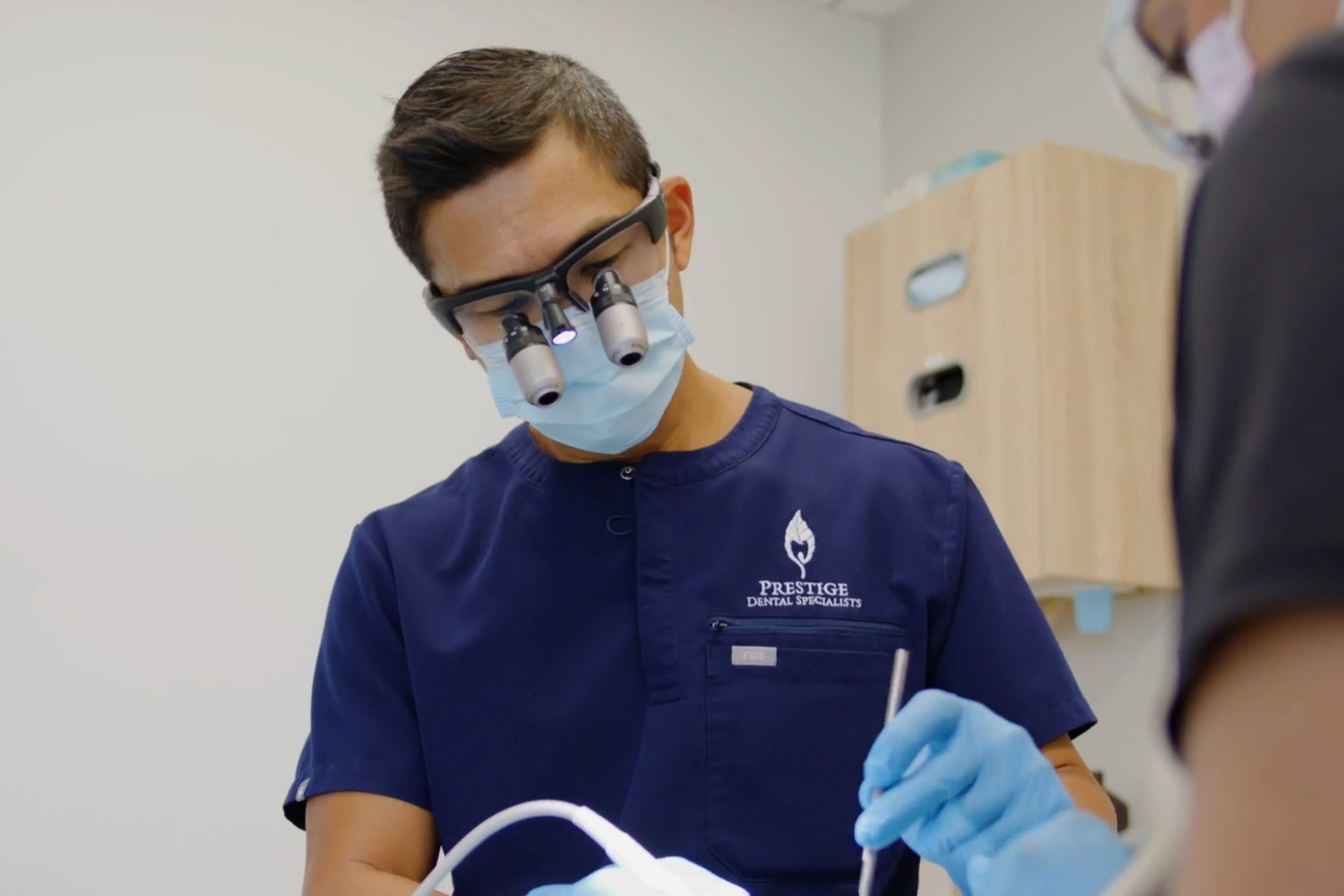
What happens during an apicoectomy
Step 1: Precise Access
A small opening is made in the gum tissue near the affected tooth to allow access to the root tip and surrounding area.
Step 2: Removal of Infection
The infected tissue and a small portion of the root tip are carefully removed.
Step 3: Root-End Seal
A biocompatible filling material is placed at the end of the root canal to seal it from future bacterial invasion.
Step 4: Healing
The area is sutured, and the surrounding bone begins to heal naturally over time. Sometimes, bone grafting and/or PRF may be used to promote healing.
This microsurgical approach eliminates infection at its source while preserving the rest of the tooth structure.
The Curious Corner
What is the difference between a root canal and an apicoectomy?
Is root canal surgery painful?
How successful is an apicoectomy in our Annandale office?
What happens if I don’t treat the infection?
Is extraction a better option?
What to expect during root canal surgery
- Advanced diagnostics: CBCT imaging for precise 3D visualization of the root structure, surrounding bone, and vital structures such as the sinus cavity.
- Microscope-guided precision: Enhanced magnification for accurate removal of infection.
- Clear communication: A detailed explanation of your diagnosis and treatment plan.
- Comfort-first care: Local anesthesia along with sedation options such as nitrous oxide (laughing gas), oral sedation, or IV sedation to help ensure a comfortable experience.
- Coordinated treatment: Collaboration with your general dentist to ensure seamless restorative follow-up.
- Focused recovery guidance: Personalized aftercare instructions to promote healing.

Trusted by dentists. Loved by patients
We can save your natural teeth
We specialize exclusively in endodontics, including complex root canal surgery designed to preserve natural teeth.
Technology that elevates precision
With CBCT imaging and microscope-guided microsurgery, we deliver accurate treatment and dependable healing.
Comfort-centered approach
Local anesthesia and sedation options—including nitrous oxide (laughing gas), oral sedation, and IV sedation—help ensure a calm and comfortable experience.
Trusted referral partner
We work closely with dentists throughout Annandale, Fairfax County, and Northern Virginia to provide collaborative care for advanced surgical cases.
Hear from our patients


Schedule. Meet. Smile
Get the expert care you need — with specialists who listen and technology that delivers.
Our Office
7617 Little River Turnpike, Suite 910
Annandale, VA 22003
Get Directions
Our Hours:
Monday: 8:00am to 4:00pm
Tuesday: 8:00am to 4:00pm
Wednesday: 8:00am to 5:00pm
Thursday: 8:00am to 4:00pm
Friday: 8:00am to 3:00pm