
Refined care for advanced gum concerns
Trusted Conventional Periodontal Surgery in Annandale

What is conventional periodontal surgery?
In certain cases, the underlying bone may be reshaped to reduce pocket depth and create a healthier, more maintainable environment. The goal is to control infection, reduce inflammation, and support the long-term health of your teeth and surrounding structures.
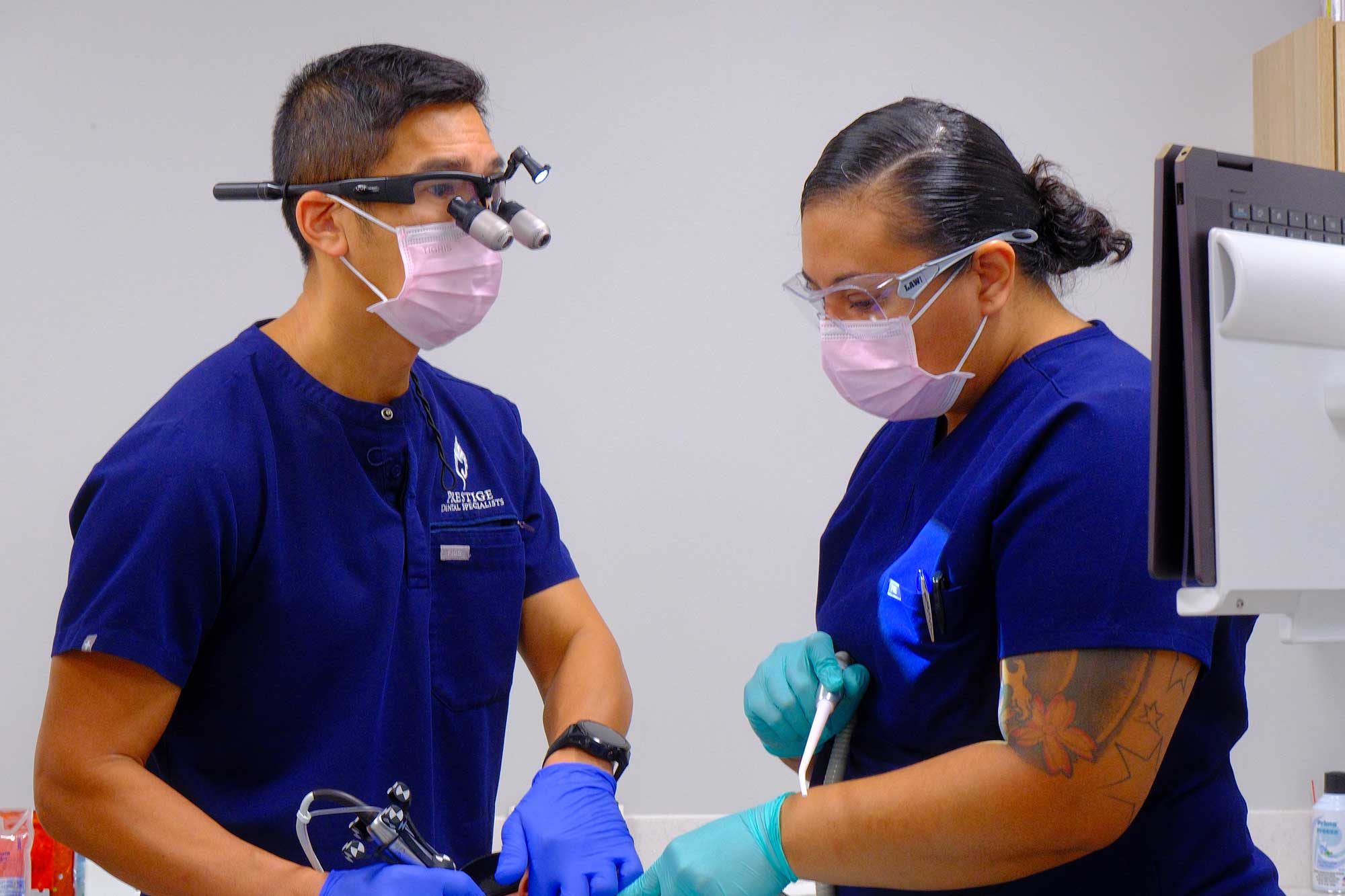
At Prestige Dental Specialists, we thoughtfully tailor periodontal surgery to each patient’s unique needs. We assess how your gums, bone levels, bite forces, and existing dental work function together, then design a treatment plan focused on long-term stability and health.
Our goal is clear: to control disease progression, stabilize your periodontal health, protect your teeth (and implants), and restore comfort and function to your smile.
Common reasons you may need periodontal surgery
When periodontal disease progresses beyond early-stage gingivitis and begins to affect the supporting bone and connective tissues around the teeth, surgical treatment may be necessary to control infection, reduce deep pockets, and help preserve the stability of your teeth or implants.
Who is a good candidate for conventional periodontal surgery?
You may be a candidate if you are experiencing moderate to advanced periodontal disease that has not fully responded to non-surgical therapy or laser sx.
- Persistent inflammation: Your gums continue to bleed, feel swollen, or remain inflamed despite prior treatment.
- Deep periodontal pockets or bone loss: You’ve been diagnosed with advanced gum disease affecting the supporting structures around your teeth.
- Recurrent infections: You’ve experienced repeated gum abscesses or flare-ups in the same area.
- Teeth showing signs of reduced support: Findings such as attachment loss, bone loss, increased mobility, or deep periodontal pockets may indicate that additional treatment is needed to help maintain long-term stability.
- Specialist referral: Your general dentist has recommended evaluation by a periodontist for advanced periodontal care.
A comprehensive periodontal evaluation — which may include detailed pocket measurements and diagnostic imaging — allows us to assess bone support, tissue health, and determine the most appropriate approach to help control infection and support long-term stability.

The Curious Corner
How do I know if I need periodontal surgery?
How is periodontal surgery planned?
Is periodontal surgery painful?
What is recovery like?
Will this save my teeth?
Do I need a referral from my dentist?
Your periodontal surgery visit, step by step
- Comprehensive evaluation and imaging: We assess gum health, pocket depths, bone levels, and tooth stability to better understand the source and extent of inflammation.
- Clear treatment plan: You’ll receive a straightforward explanation of the recommended procedure, expected healing timeline, and how progress will be evaluated.
- Technique selection and preparation: The surgical approach is carefully selected based on your anatomy, disease severity, and long-term periodontal stability.
- Comfort-focused care: Local anesthesia is standard, and sedation options may be available for longer procedures or patients with higher levels of anxiety.
- Precise treatment of affected areas (when needed): Infected tissue is carefully addressed, and underlying surfaces are cleaned and refined to create an environment that’s easier to maintain.
- Structured follow-up and maintenance: We monitor healing, review home-care strategies, and coordinate supportive periodontal cleanings to help protect your results.
Trusted by dentists. Loved by patients
Specialist-led care for advanced gum problems
Periodontal disease affects the supporting structures of your teeth. As specialists in gum and bone health, our focus is on stabilizing disease, preserving teeth when possible, and protecting the long-term success of your overall dental care.
Thoughtful planning for predictable outcomes
We use detailed measurements and imaging to guide surgical planning. Every procedure is selected based on your specific anatomy and condition, with an emphasis on long-term periodontal stability and maintainability.
Comfort and sedation tailored to you
Whether you feel anxious about treatment or simply prefer additional support, we provide local anesthesia, along with sedation options. Our goal is to help you feel calm, safe, and comfortable throughout your visit.
A trusted referral partner in Fairfax County
We work closely with general dentists to ensure clear communication, coordinated treatment sequencing, and periodontal care that supports restorative and long-term dental success.
Hear from our patients


Schedule. Meet. Smile
Get the expert care you need — with specialists who listen and technology that delivers.
Our Office
7617 Little River Turnpike, Suite 910
Annandale, VA 22003
Get Directions
Our Hours:
Monday: 8:00am to 4:00pm
Tuesday: 8:00am to 4:00pm
Wednesday: 8:00am to 5:00pm
Thursday: 8:00am to 4:00pm
Friday: 8:00am to 3:00pm